lena.hu@nano-sepmer.com    +8618379535964
Cont

Have any Questions?

+8618379535964

STRO

First 123 Last1/3
Product Overview


The STRO system is a high-recovery, heavy-duty membrane separation technology engineered for industrial wastewater concentration and the treatment of challenging wastewater streams. Depending on the membrane configuration and operating conditions, STRO systems are deployed for applications involving high salinity, elevated organic loads, and concentrated process wastewater.
For industrial users, membrane selection depends on feedwater composition, operating pressure, temperature, scaling potential, pretreatment requirements, and the required concentrate volume.
Final application suitability is established through comprehensive feedwater analysis, membrane compatibility data, and pilot testing where necessary.


Spacer‑Tube Reverse Osmosis / STRO
Add to Inquiry
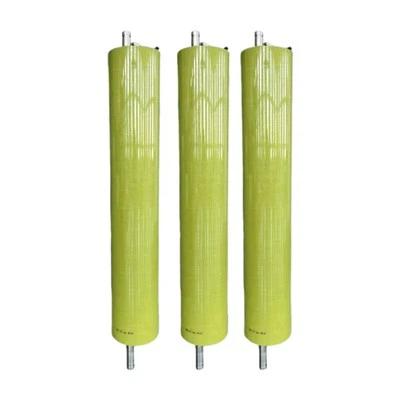
Spacer‑Tube Reverse Osmosis / STRO

1. Ultra high pressure resistance: Multiple models available, max operating pressure up to 120 bar, suitable for high pressure concentration working conditions.2. Stable desalination under high
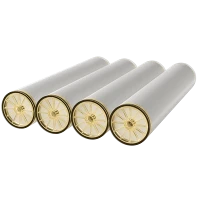
Spacer Tube Reverse Osmosis Element
Add to Inquiry
Spacer Tube Reverse Osmosis Element

1. Ultra-high pressure resistance, multiple pressure grades available2. 98.5% stable salt rejection under rated operating pressure3. Handles wastewater with high salinity and high COD4. Wide pH
STRO Membrane Element
Add to Inquiry
STRO Membrane Element

1. Excellent anti-fouling performance, less frequent chemical cleaning cycles2. Tolerates high operating pressure, capable of concentrating wastewater to high salinity3. Stable desalination rate
High Pressure STRO Membrane Element
Add to Inquiry
High Pressure STRO Membrane Element

1. Exceptional high pressure resistance, with maximum working pressure reaching up to 120 bar, built for heavy-duty wastewater concentration projects.2. Consistent salt rejection performance under
High Pressure Concentrated STRO Element
Add to Inquiry
High Pressure Concentrated STRO Element

1. Extreme pressure resistance: Multiple models available, maximum operating pressure up to 120 bar, designed for high-pressure concentration and wastewater volume reduction.2. Consistent
STRO 8042-75-TP Compact Unit STRO Membrane
Add to Inquiry
STRO 8042-75-TP Compact Unit STRO Membrane

Element Material: Polyamide TFC Membrane. Shell Medium: FRP Glass Fiber Composite Material
STRO 8042-90-HM Heavy Metal Max Rejection STRO Membrane
Add to Inquiry
STRO 8042-90-HM Heavy Metal Max Rejection STRO Membrane

Membrane material: polyamide composite membrane. Internal Flow Layout: 47mil Parallel Flow Path, carious Custom sizes can be provided
STRO 8042-75-LB Low Boron Rejection STRO Membrane
Add to Inquiry
STRO 8042-75-LB Low Boron Rejection STRO Membrane

Filter Element Type: High-pressure Seawater Desalination RO Element. Outer Enclosure Material: Corrosion-resistant GRP Composite. Flow Spacer Structure: 47mil Parallel Flow Channel, diverse custom
STRO 8042-90-D Printing & Dyeing STRO Membrane
Add to Inquiry
STRO 8042-90-D Printing & Dyeing STRO Membrane

Membrane material: polyamide composite membrane. Inner Flow Layout: 47mil Parallel Channel Spacer, Diverse Custom Sizes Supported
STRO 8042-90-SC High Turbidity Resistant STRO Membrane
Add to Inquiry
STRO 8042-90-SC High Turbidity Resistant STRO Membrane

RO Spec: Heavy-duty High-pressure Seawater Desalination Membrane. Casing Spec: Glass-fiber reinforced composite. Passage Structure: 47mil Parallel Flow Channel, Custom Sizes Supported
STRO 8042-120-FR High Concentration Ratio STRO Membrane
Add to Inquiry
STRO 8042-120-FR High Concentration Ratio STRO Membrane

Membrane Variant: Pressure-proof Reverse Osmosis Membrane for Seawater Desalination. Housing material: Glass Fiber Reinforced Plastic. Flow Passage Spec: 47mil Parallel Flow Path, Alternative Sizes
STRO 8042-90-A Acid-Alkali High Rejection STRO Membrane
Add to Inquiry
STRO 8042-90-A Acid-Alkali High Rejection STRO Membrane

Core Film Material: Thin-film Polyamide Composite. Pressure Shell: Fiberglass Reinforced Composite
First 123 Last1/3
 

Structure and Working Principle


STRO operates through pressure-driven membrane separation. Applied hydraulic pressure drives water through a selective membrane while dissolved constituents remain in the concentrate stream. Separation performance depends on membrane characteristics, feedwater composition, operating pressure, temperature, recovery, and concentration polarization control.

 
01
 

Flow Channel Configuration:

Feedwater passes across the membrane surface through an optimized open-channel and short-tube geometry. This design minimizes stagnant dead zones, resists particulate accumulation, and maintains high cross-flow velocities, which helps mitigate fouling when processing wastewater with elevated suspended solids.

 
02
 

Membrane Material Matrix:

Composite polyamide flat-sheet membranes featuring high chemical tolerance, broad pH resistance (pH 2 - 12), and optimized salt/organic rejection layers for TDS and heavy organics.

 
03
 

Module Construction and Sealing:

Modular stacking of stainless steel or titanium pressure vessels housing disc-tube/short-tube modules, equipped with dual O-ring positive-sealing mechanisms to prevent fluid bypass under high operating pressures.

Spacer Tube Reverse Osmosis Element


Key Features

Anti-Fouling Open Channel:

Engineered with wide open-channel flow paths (channel height up to 2.5 mm), tolerating feed turbidity up to NTU < 20 and suspended solids up to 100 mg/L, which substantially reduces pre-treatment complexity.

High Pressure Envelope:

Certified for continuous operation up to 120 bar (12 MPa), empowering systems to overcome extreme osmotic pressures and achieve high volume reduction (single-pass or multi-stage recovery rates up to 85% - 90%).

Modular Maintenance Architecture:

Individual module tubes can be inspected, cleaned, or replaced independently without scrapping entire pressure vessel assemblies, minimizing field maintenance labor and plant downtime.

Aggressive CIP Chemical Resistance:

The membrane matrix withstands rigorous Clean-In-Place protocols, including strong acids, heavy alkalis, and active chlorine exposure required to strip stubborn organic and biological foulants.


Applications and Operating Conditions


Parameter

Specification

Target Feedstock

Hypersaline industrial effluent, landfill leachate, RO/NF concentrate

Max Feed TDS

Up to 150,000 mg/L

Max COD / TOC

Tolerates COD up to 10,000 mg/L (application-dependent)

Feed pH Range

2.0 - 12.0 (Continuous operation)

Max Operating Pressure

120 bar (12 MPa)

Max Operating Temperature

45°C

Max Feed SDI (15 min)

< 15


Technical Specifications


Model

Module Diameter (mm)

Active Area (sq.m)

Max Pressure (bar)

Design Flow Rate (cubic meters per hour)

Housing Material

STRO-150-4

150

4.2

120

1.5 - 2.5

SS316L / Titanium

STRO-200-8

200

8.5

120

3.0 - 5.0

SS316L / Titanium

STRO-200-12

200

12.0

120

4.5 - 7.0

SS316L / Duplex Steel


Spacer‑Tube Reverse Osmosis / STRO


Manufacturing and Quality Control

Production relies on rigorous precision manufacturing standards and automated factory testing:
Component and Material Verification: Raw membrane materials, module dimensions, sealing components, and pressure housing grades are strictly checked against approved engineering specifications.
Precision Assembly and Welding: Components are assembled via CNC-controlled welding and torque-calibrated fastening to maintain internal structural integrity under maximum hydraulic load.
Manufacturing and Quality Control Every pressure vessel undergoes a 1.5x hydrostatic pressure test (180 bar) for 30 minutes. Individual modules undergo rigorous individual salt-rejection and integrity checks on dedicated test rigs prior to packaging.


Customization and Technical Support
 

Membrane Selection and Sizing:

Custom membrane area calculations and mass-balance projections based on raw feed water chemistry reports (Ion chromatography, TOC, SDI).

Pilot Testing Rental Units:

Skid-mounted pilot STRO units available for on-site feasibility testing, determining exact recovery limits and optimal recovery parameters.

System Integration Support:

Complete P&ID schematics, high-pressure pump selection, energy recovery device matching, and PLC automation control philosophy packages for system integrators.


FAQ


Q: How does STRO differ from traditional spiral-wound RO when treating high-salinity wastewater?

A: Standard spiral-wound RO has narrow, enclosed feed spacers (0.6 - 0.8 mm), making it highly susceptible to rapid particulate clogging and scaling at high concentrations. STRO utilizes an open, short-channel design with turbulent cross-flow hydrodynamics, enabling direct treatment of high-TDS streams without requiring ultra-strict SDI pre-treatment.

Q: What is the maximum concentration limit (TDS or Recovery) achievable with STRO?

A: STRO can accept feed TDS up to 150,000 mg/L and achieve system recovery rates between 80% and 90%, governed by the osmotic pressure ceiling and scaling thresholds of specific scaling ions (such as silica or calcium sulfate).

Q: Can STRO treat wastewater with high COD and suspended solids?

A: Yes, subject to feedwater compatibility assessment. STRO tolerates higher suspended solids and organic loads than standard RO, but pretreatment requirements must always be evaluated based on particle characteristics and organic composition.

Q: How are STRO membranes cleaned during routine facility operation?

A: The system supports automated Clean-In-Place cycles. Due to the open-channel architecture, chemical cleaning solutions circulate at high velocities to scour away foulants, restoring membrane permeability without requiring manual physical teardown.

Q: What is the typical operational lifespan of STRO membrane modules?

A: Under recommended operating parameters, consistent chemical maintenance, and stable feed pre-treatment, STRO membrane modules typically achieve a reliable service life of 3 to 5 years.

Q: Can STRO be integrated into existing zero-liquid discharge treatment trains?

A: Yes. STRO is frequently implemented as an advanced volume-reduction stage prior to thermal evaporators or crystallizers, cutting the evaporator feed volume by up to 80% and drastically lowering overall system CAPEX and OPEX.

Q: What water quality data is required to obtain an accurate model selection and commercial quotation?

A: To formulate a precise engineering proposal, please provide: Feed TDS and detailed ionic analysis, COD/TOC, Suspended Solids, pH, Operating Temperature, and Target Daily Treatment Capacity (cubic meters per day).

With abundant experience, we are one of the most professional stro manufacturers and suppliers in China. Welcome to wholesale high quality stro in stock here and get pricelist from our factory. We also accept customized orders.

Space Tube Reverse Osmosis, stro, STRO Module 75bar

(0/10)

clearall