


Tubular Modules

ODM Manufacturing Service|Simplify Your Project Delivery
Choose Hangzhou Nanoimp for ODM cooperation to help engineering companies serve end customers. With our own factory, we customize complete containerized water treatment systems. Process, layout, piping and electric control are tailored according to water quality, power supply and site conditions to handle harsh conditions such as leachate and high-salinity wastewater. All equipment passes FAT test before shipment with full bilingual export documents. You focus on owner communication and commercial affairs, while we take charge of process design, manufacturing and remote technical support.
Product Overview
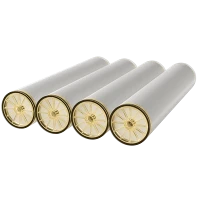
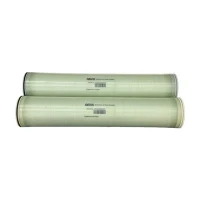
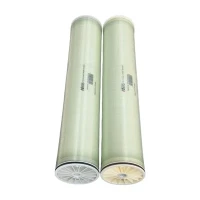
Tubular membrane modules are cross-flow filtration components designed for liquid-solid separation and the treatment of process streams containing suspended solids or other potential foulants. Their tubular feed channels allow the feed to flow along the membrane surface while permeate passes through the membrane wall into a separate collection channel.
Compared with membrane configurations that use narrower feed channels, tubular modules may be suitable for applications where feed solids, viscosity, or fouling potential need to be considered during membrane selection. Actual suitability depends on the membrane material, channel dimensions, feed characteristics, and operating conditions.

Product Categories
Latest Products


Working Principle and Construction
Separation Mechanism
Cross-Flow Dynamics: Feed liquid travels through the tubular channel parallel to the membrane surface. A portion of the liquid passes through the membrane as permeate, while retained particles and other rejected substances remain in the feed or concentrate stream.
Performance Factors: Separation outcomes depend on pore characteristics or molecular weight cut-off (MWCO), feed composition, operating pressure, cross-flow conditions, and the properties of the substances being separated.
Fouling Management: Cross-flow operation helps manage accumulation, though fouling, scaling, and channel blockage remain dependent on feed quality, pretreatment, operating conditions, and cleaning procedures.
Construction and Materials
Tubular membrane modules generally consist of a membrane layer, a supporting structure, sealing components, and a housing or module enclosure.
Membrane Material: PVDF, PES, PAN, or PTFE options available based on chemical compatibility, temperature, and separation requirements.
Support Structure: Perforated carrier tubes providing mechanical support and pressure rating compliance for each model.
Sealing and Potting: High-strength sealing components separating feed and permeate domains.
Module Configuration: Tube diameter, effective length, membrane area, housing material, and process connections vary by model. (Please refer to confirmed technical datasheets for specific construction details).
Key Features
Open Tubular Feed Channels: Designed with defined flow paths. Channel diameter is a primary selection factor when treating streams containing suspended solids, fibrous matter, or foulants. (Maximum allowable particle size and TSS concentration must be evaluated per model).
Flexible Membrane Material Selection: Tailored to specific chemical compositions, temperatures, exposure durations, and cleaning regimens without assuming universal chemical resistance.
Configurable Module Dimensions: Tube inner diameter, length, area, housing material, and connections are adaptable to specific system integration requirements.
Optimized Cross-Flow Operation: Maintains continuous feed movement along the membrane surface with independently evaluated velocity and transmembrane pressure (TMP).
Applications and Operating Conditions
Target Process Streams
Landfill Leachate Treatment: Evaluated as part of a treatment train for leachate containing suspended solids and foulants.
Oily Wastewater Treatment: Applied for separating industrial wastewater containing oil droplets, suspended solids, or metalworking-fluid residues.
Digestate and Biogas Slurry Processing: Used for separating liquid and retained solids from anaerobic digestion streams.
Industrial Process Liquid Concentration: Concentrates macromolecules, suspended matter, or retained components in chemical and fermentation processes.
Operating Parameters to Confirm
Feed source, composition, and pretreatment steps
Total suspended solids (TSS) and particle-size distribution
Viscosity, oil content, and fiber content
pH and chemical composition
Operating and cleaning temperatures
Required throughput, recovery rate, and target permeate quality
Allowable transmembrane pressure (TMP) and cross-flow velocity

Technical Specifications and Model Comparison
|
Specification Field |
Requirement / Information Standard |
|
Model Code |
Confirmed product model designation |
|
Membrane Material |
Verified membrane polymer and construction |
|
Effective Membrane Area |
m2 per module |
|
Tube Inner Diameter |
mm |
|
Effective Tube Length |
mm |
|
Housing Material |
Confirmed material grade |
|
Max Operating Pressure |
MPa (with defined pressure limits) |
|
Max Transmembrane Pressure (TMP) |
MPa |
|
Operating Temperature Range |
Degrees C |
|
Permitted Feed pH |
Confirmed operational range |
|
Chemical Cleaning Compatibility |
Chemical type, concentration, temperature, and exposure limits |
|
Recommended Cross-Flow Velocity |
m/s |
|
Max Feed TSS |
mg/L (subject to defined feed conditions) |
|
Connection Type |
Standard and size confirmation |
Manufacturing and Quality Control
Production processes follow strict internal quality protocols to ensure mechanical integrity:
Incoming Material Inspection: Verification of membrane polymers, supporting components, and seals against purchasing and product requirements.
Membrane Inspection: Testing appropriate to the specific membrane type and separation characteristics.
Assembly and Sealing Inspection: Verification of structural integrity and isolation between feed and permeate channels.
Pressure and Leak Testing: Executed according to confirmed product design and specified acceptance criteria.
Product Identification and Records: Model identification, batch logging, and inspection documentation.
Customization and Technical Support
Engineering Consultation:
Evaluation of feed characteristics, separation objectives, and operating requirements.
chnical Evaluation Support:
Te Assessing membrane selection, module dimensions, operating envelopes, system integration, and pilot testing feasibility.
Project Support:
Custom lengths, specialized housing materials, and connection configurations available for OEM and engineering partners upon request.
FAQ
With abundant experience, we are one of the most professional tubular modules manufacturers and suppliers in China. Welcome to wholesale high quality tubular modules in stock here and get pricelist from our factory. We also accept customized orders.
tubular modules, Tubular Ultrafiltration Membrane