

Pure Water System
Industrial Pure Water System Overview
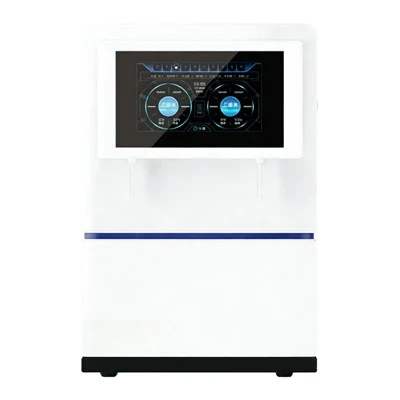
The Industrial Pure Water System is a skid-mounted water treatment unit engineered to convert municipal feed water into high-purity process water. Integrating a dual-pass Reverse Osmosis (RO) and Electrodeionization (EDI) configuration, the system removes dissolved minerals, ions, organics, and suspended solids.
It is deployed in manufacturing facilities requiring strict water quality compliance, including pharmaceutical preparation loops, semiconductor component rinsing, and high-pressure boiler feed. The system delivers continuous flow rates from 1.0 m3/h to 50.0 m3/h under automated, chemical-free polishing operation.

Product Categories
Latest Products


Working Principle and Construction
The treatment process is integrated onto a structural carbon steel skid, regulated via an industrial programmable logic controller (PLC).
Pre-treatment Subsystem
Multi-media filtration removes suspended solids down to 20 um, followed by activated carbon filtration to reduce free chlorine below 0.1 mg/L to protect downstream composite membranes. Anti-scalant dosing prevents mineral scaling on membrane surfaces.
Reverse Osmosis Subsystem
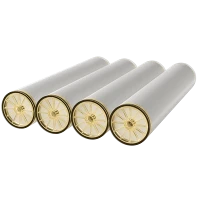
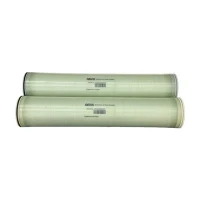
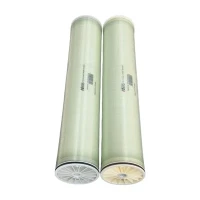
High-pressure vertical multistage pumps feed water through spiral-wound thin-film composite polyamide RO membranes at operating pressures of 1.2 MPa to 1.5 MPa, achieving a salt rejection rate of 98.5% to 99.5%.

Electrodeionization Subsystem
RO permeate enters the EDI module where DC electric fields continuously regenerate ion-exchange resins inside the chambers, driving residual ions through ion-exchange membranes into a reject stream without acid or caustic chemical regeneration cycles.
Piping Architecture
High-purity process piping is constructed from 316L stainless steel featuring automated orbital welding, internal electro-polishing to Ra <= 0.4 um, and sanitary diaphragm valves to eliminate dead legs and bacterial proliferation risks.
Key Features
High-Purity Continuous Output
Delivers water with a stable resistivity of 15 MΩ·cm to 18.2 MΩ·cm at 25°C and Total Organic Carbon levels below 50 ppb, fulfilling USP and cGMP specifications.
Chemical-Free Regeneration
Eliminates bulk storage and handling of hazardous hydrochloric acid and sodium hydroxide, reducing operational safety hazards and wastewater neutralization burdens.
Energy-Efficient Design
Integrates VFD-controlled high-pressure pumps and optional energy recovery systems, maintaining specific energy consumption below 1.5 kWh/m3 of produced pure water.
Modular Skid Configuration
Pre-piped, pre-wired, and hydrostatically tested at the factory, reducing on-site mechanical installation footprint and connection time by up to 60%.
Real-Time Instrumentation
Inline sensors monitor flow rate, temperature, pH, differential pressure, and resistivity continuously, feeding data to an industrial HMI touch panel with Modbus/TCP communication capability.
Applications and Operating Conditions
Target Applications
Target applications include electronics and semiconductor silicon wafer wet station rinsing and printed circuit board manufacturing. Pharmaceutical and biotech applications cover purified water loops compliant with USP and EP monographs. Power generation utilizes high-pressure boiler makeup water systems. Fine chemicals rely on catalyst preparation and high-purity solvent dilution.
Operating Limits and Feedwater Parameters
Operating limits and feedwater parameters require a feedwater temperature of 5°C to 35°C, feedwater inlet pressure of 0.2 MPa to 0.4 MPa, maximum feed SDI under 5 for 15 minutes, feed free chlorine below 0.1 mg/L, and maximum feed total dissolved solids below 1,000 mg/L.

Technical Specifications
|
Model Series |
Nominal Flow Rate (m3/h) |
RO Recovery Rate |
EDI Output Resistivity (MΩ·cm) |
Skid Dimensions (L x W x H, mm) |
Total Power Rating (kW) |
|
PWS-1.0 |
1.0 |
75% - 80% |
>= 15.0 (25°C) |
2200 x 1100 x 1800 |
4.5 |
|
PWS-5.0 |
5.0 |
75% - 85% |
>= 18.0 (25°C) |
3500 x 1400 x 1950 |
15.0 |
|
PWS-10.0 |
10.0 |
75% - 85% |
>= 18.2 (25°C) |
4500 x 1600 x 2000 |
30.0 |
|
PWS-20.0 |
20.0 |
80% - 88% |
>= 18.2 (25°C) |
5800 x 1800 x 2100 |
55.0 |
Electrical requirements are 380V or 480V at 50 or 60Hz, 3-Phase with custom power configurations available.
Control architecture utilizes Siemens S7-1200 or Allen-Bradley Micro850 PLC paired with a 10-inch industrial HMI panel.
Factory testing protocols involve hydrostatic pressure testing at 1.5x design rating, electrical insulation resistance testing per UL and CE guidelines, and 72-hour functional dry and wet testing.
Manufacturing and Quality Control
Welding Standards
Welding standards involve automated orbital welding executed on all 316L sanitary piping by AWS certified technicians, with weld logs and endoscopic borescope records archived in the quality data dossier.
Surface Passivation
Surface passivation consists of mechanical polishing followed by a controlled nitric and citric acid passivation bath to eliminate free iron and establish a uniform chromium oxide passive layer.
Modular Assembly
Modular assembly includes panel fabrication, PLC wiring, and pneumatic tubing installation executed in dedicated bays adhering to IP54 and NEMA 4 enclosure specifications.
Traceability and Documentation
Traceability and documentation material test certificates conforming to EN 10204 3.1 are provided for all wetted metallic components, and factory acceptance testing reports are issued prior to dispatch.
Customization and Technical Suppor
Feedwater Engineering Review
Feedwater engineering review is conducted by our technical team evaluating complete raw water ion analysis reports to optimize pre-treatment design and membrane sizing.
Material Customization
Material customization allows process piping and valve configurations to be specified in PVDF, PP, or PVC-U based on specific chemical compatibility requirements.
Engineering Data Package
Engineering data packages include P&ID drawings, electrical schematics, instrument calibration certificates, and comprehensive operation and maintenance manuals.
Commissioning Assistance
Commissioning assistance is provided via remote digital startup through an encrypted VPN or on-site field engineering deployment for instrumentation loop check and operator training.
FAQ
With abundant experience, we are one of the most professional pure water system manufacturers and suppliers in China. Welcome to wholesale high quality pure water system in stock here and get pricelist from our factory. We also accept customized orders.
pure water system, Medical Ultrapure Water System, Commercial Water Purifier 1 3T