


Sanitary Membrane

ODM Manufacturing Service|Simplify Your Project Delivery
Choose Hangzhou Nanoimp for ODM cooperation to help engineering companies serve end customers. With our own factory, we customize complete containerized water treatment systems. Process, layout, piping and electric control are tailored according to water quality, power supply and site conditions to handle harsh conditions such as leachate and high-salinity wastewater. All equipment passes FAT test before shipment with full bilingual export documents. You focus on owner communication and commercial affairs, while we take charge of process design, manufacturing and remote technical support.
Product Overview
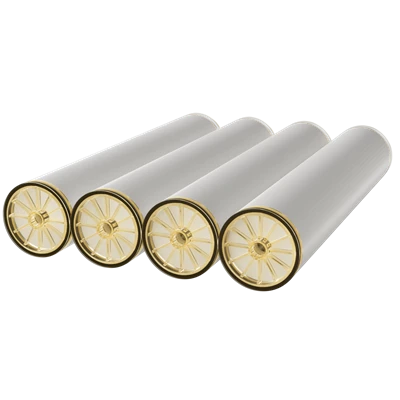
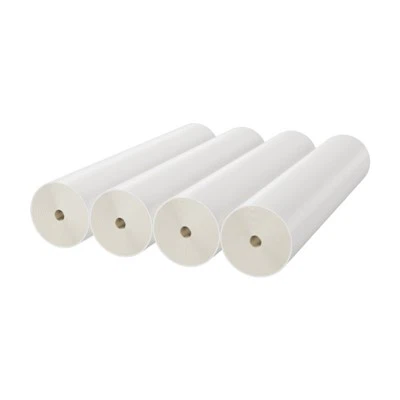
Sanitary membrane elements are membrane filtration components designed for liquid processing applications where cleanability, material compatibility, and controlled operating conditions are important selection criteria.
Depending on the membrane type and module configuration, these elements may be considered for food and beverage processing, biochemical separation, pharmaceutical process streams, and specialized water treatment applications.
Product selection depends on the target substances, feed composition, required separation performance, operating pressure, temperature, and cleaning requirements. Membrane chemistry, module construction, and allowable operating conditions should be confirmed for the selected model before purchase.




Product Categories
Latest Products


Working Principle and Construction
Sanitary membrane elements separate selected components from a liquid stream through a membrane barrier. Depending on the membrane type and operating conditions, target substances may be retained while water or other smaller components pass through the membrane.
The separation mechanism and module construction vary by product type.
Membrane Material
Membrane chemistry should be confirmed for each model. Depending on the product range, relevant materials may include polyethersulfone (PES), polyvinylidene fluoride (PVDF), or thin-film composite polyamide.
Material selection should account for the feed composition, target separation, operating temperature, and compatibility with the intended cleaning agents.
Separation Rating
The applicable separation rating depends on the membrane type:
Microfiltration (MF): Typically specified by nominal pore size.
Ultrafiltration (UF): Commonly specified by nominal molecular weight cut-off (MWCO) or pore size.
Nanofiltration (NF): Evaluated using relevant solute rejection data and, where applicable, nominal MWCO.
Reverse Osmosis (RO): Commonly evaluated using salt rejection and permeate flow under defined test conditions.
Module Configuration
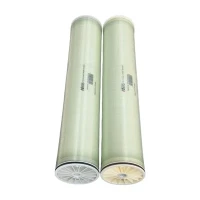
The module configuration should be confirmed for each product series. For spiral-wound elements, relevant components may include the membrane envelope, feed spacer, permeate carrier, central permeate tube, outer wrap, and end fittings.
For sanitary applications, the construction details of the outer wrap, adhesive or potting materials, seals, and fluid-contact surfaces should be reviewed against the intended cleaning and hygiene requirements.
Key Features
Application-Specific Membrane Selection
Different membrane types support different separation requirements. Selection should be based on the target substances, required retention, feed characteristics, and operating conditions rather than membrane material alone.
Cleaning Compatibility
Cleaning compatibility depends on the complete element construction, including the membrane layer, adhesives, seals, and supporting components. Confirm the allowable cleaning chemicals, concentration, temperature, exposure time, and cleaning frequency for the selected model.
Configuration and System Compatibility
Element dimensions, permeate tube configuration, end connections, and pressure vessel requirements should be checked before ordering replacement elements or specifying components for a new filtration system.

Applications and Operating Conditions
Food and Beverage Processing: Membrane filtration may be considered for selected liquid clarification, concentration, or fractionation processes. Buyers should confirm the suitability of the membrane, adhesives, seals, and other fluid-contact components for the intended product and cleaning regime.
Biochemical Processing: Potential applications include selected enzyme-containing process streams, fermentation-related liquids, and other biochemical separation processes. Feed composition, solids loading, target molecule size, and cleaning requirements should be assessed before selecting a membrane.
Pharmaceutical Process Streams: Membrane elements may be considered for appropriate process separation or concentration duties, subject to the required process specifications, material compatibility, and applicable regulatory requirements. Suitability for a specific pharmaceutical application must be verified rather than assumed from the product category.
Industrial Water Treatment: Depending on the membrane type, applications may include selected water purification, polishing, or concentration processes. Feedwater quality, pretreatment, operating pressure, and the required permeate quality determine the appropriate configuration.
Technical Specifications
|
Parameter |
Ultrafiltration (UF) |
Nanofiltration (NF) |
Reverse Osmosis (RO) |
|
Membrane material |
Confirm by model |
Confirm by model |
Confirm by model |
|
Separation rating |
MWCO or pore size, as applicable |
MWCO and/or solute rejection data |
Salt rejection under defined test conditions |
|
Element dimensions |
Confirm by model |
Confirm by model |
Confirm by model |
|
Effective membrane area |
Confirm by model |
Confirm by model |
Confirm by model |
|
Feed spacer configuration |
Confirm by model |
Confirm by model |
Confirm by model |
|
Permeate tube and end connections |
Confirm by model |
Confirm by model |
Confirm by model |
|
Maximum operating pressure |
Confirm by model |
Confirm by model |
Confirm by model |
|
Maximum operating temperature |
Confirm by model |
Confirm by model |
Confirm by model |
|
Operating pH range |
Confirm by model |
Confirm by model |
Confirm by model |
|
Cleaning conditions |
Confirm by model |
Confirm by model |
Confirm by model |
|
Test method and acceptance criteria |
Request datasheet |
Request datasheet |
Request datasheet |

Manufacturing capability and quality control should be evaluated against the actual production processes and inspection procedures used for the selected membrane series.
Relevant manufacturing and quality information may include:
Membrane material and component specification control
Visual and dimensional inspection
Verification of module assembly and sealing
Applicable membrane integrity or performance testing
Product or batch identification, where implemented
Customization and Technical Support
Customization options depend on the product series, manufacturing capability, and compatibility requirements of the intended system.
Dimensional and Configuration Requirements
For replacement elements or new system projects, provide the existing element dimensions, pressure vessel specifications, permeate tube configuration, end connection details, and other relevant installation requirements.
Any proposed dimensional or structural modification should be reviewed for compatibility with the intended operating conditions.
Membrane Selection and Evaluation
For demanding separation applications, technical evaluation may consider the feed composition, target substances, required permeate quality, operating conditions, and cleaning regime.
Where available, laboratory testing or pilot evaluation can help assess separation performance and fouling behavior under representative process conditions. The availability and scope of these services should be confirmed with the supplier.
FAQ
With abundant experience, we are one of the most professional sanitary membrane manufacturers and suppliers in China. Welcome to wholesale high quality sanitary membrane in stock here and get pricelist from our factory. We also accept customized orders.
Sanitary Spiral RO Membrane, Sanitary Spiral NF Membrane, Sanitary Spiral UF Membrane 0 22 m