

Product Overview
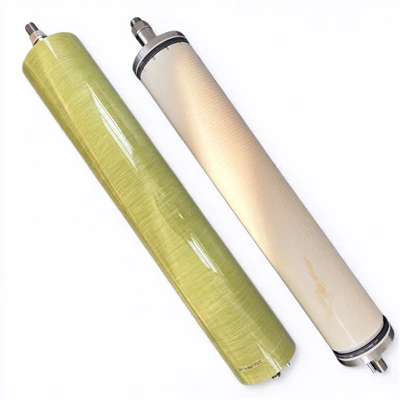
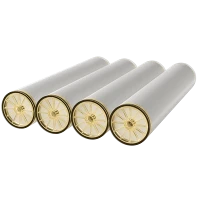
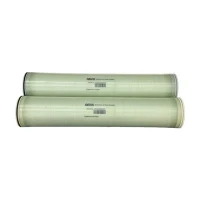
DTRO (Disc Tube Reverse Osmosis) membrane modules use flat-sheet membranes arranged in a disc-and-channel configuration to separate dissolved substances from wastewater under applied pressure. They are used in wastewater treatment and concentrate management applications where feedwater salinity, organic loading, and fouling potential must be considered during system design.
DTRO technology can be considered for industrial wastewater streams that require dissolved-solids separation, water recovery, or concentrate volume reduction. Actual treatment performance depends on feedwater composition, membrane configuration, operating pressure, temperature, pretreatment, and the required permeate quality.



Product Categories
Latest Products
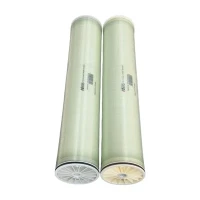


Working Principle and Construction
Separation Mechanism
Feedwater enters the DTRO module and flows through channels formed by the disc assembly. Under applied hydraulic pressure, water passes through the membrane and enters the permeate collection pathway, while the remaining liquid becomes more concentrated and exits as retentate.
The open-channel configuration is intended to accommodate feedwater conditions that may be challenging for conventional spiral-wound membrane elements. However, fouling, scaling, and solids accumulation remain dependent on feedwater characteristics, pretreatment, flow conditions, and operating practices.
Main Components
Flat-Sheet Membranes: The membrane layer provides the separation interface between the feedwater and permeate streams. Membrane chemistry and configuration should be selected according to the target substances, water chemistry, operating pressure, and temperature.
Hydraulic Guide Discs: Guide discs form the feedwater channels and direct liquid flow through the module. Channel geometry and spacing should be confirmed against the selected product configuration.
Permeate Collection Structure: The permeate collection pathway carries water that passes through the membrane to the designated outlet. Its design and sealing arrangement depend on the module construction.
Sealing Components: Seals are used at designated interfaces to separate feedwater, concentrate, and permeate pathways. Seal materials must be compatible with the operating environment and approved cleaning chemicals.
Pressure-Bearing Components: The module housing, end connections, fastening components, and other pressure-bearing parts must comply with the applicable design limits of the selected model. Materials and pressure ratings should be confirmed in the product specification.
Key Features
Disc-and-Channel Flow Configuration:
The disc-based structure forms feedwater channels across the membrane assembly. Channel dimensions and hydraulic conditions influence flow distribution, solids handling, and pressure drop.
Modular Component Design:
Depending on the module construction, selected membrane or sealing components may be replaceable during maintenance. The replacement procedure, compatible spare parts, and service requirements should follow the manufacturer's instructions.


High-Pressure Separation:
DTRO modules are designed for pressure-driven separation. The required operating pressure depends on feedwater salinity, osmotic pressure, target recovery, membrane characteristics, and the overall system design. Maximum allowable pressure is model-specific and must be verified against the manufacturer's technical documentation.
Feedwater and Chemical Compatibility:
Membrane performance and component compatibility depend on feedwater chemistry, temperature, pH, and exposure to cleaning chemicals. Operating and cleaning limits must be established for the complete module, including the membrane and wetted components.
Applications and Operating Conditions
Landfill Leachate Treatment
DTRO may be considered for landfill leachate treatment where salinity, organic loading, suspended solids, and scaling potential require careful process evaluation.
High-Salinity Industrial Wastewater
For high-salinity industrial wastewater, membrane selection should account for osmotic pressure, salt composition, scaling risk, chemical compatibility, and the pressure limits of the selected module.
RO and NF Concentrate Management
DTRO may be evaluated as part of a multi-stage treatment process for reducing concentrate volume or recovering additional water. The appropriate configuration depends on the existing treatment train, concentrate composition, recovery target, and downstream disposal or treatment requirements.
Operating Conditions and Feedwater Requirements
The following parameters should be confirmed for each product model before selection:
Maximum operating pressure: Model-specific rated limit
Operating temperature: Approved operating range
Continuous operating pH: Manufacturer-confirmed range
Cleaning pH: Approved range for the membrane and all wetted components
Feedwater TDS: Applicable feedwater range and ionic composition
COD and organic loading: Feedwater characteristics relevant to the intended application
Suspended solids: Allowable concentration and pretreatment requirements
Turbidity and SDI: Applicable feedwater limits, where specified
Feed flow range: Model-specific flow range and measurement basis
Recovery rate: Design target based on feedwater and system configuration
Manufacturing and Quality Control
DTRO module quality control addresses membrane assembly, sealing interfaces, dimensional conformity, and pressure-bearing components. Quality checks include:
Component Inspection:
Verify membrane materials, guide discs, sealing components, and pressure-bearing parts against approved product specifications.
01
Assembly Inspection:
Check membrane placement, sealing interfaces, fastening components, and other critical assembly features against the applicable assembly requirements.
02
Dimensional Inspection:
Inspect specified dimensions and critical geometric features using suitable measuring equipment and documented acceptance criteria.
03
Pressure Testing:
Pressure-bearing components or assembled modules are tested according to the manufacturer's approved procedures and applicable product ratings.
04
Inspection Records:
Maintain records for component inspection, assembly checks, pressure testing, nonconformance handling, and final product release.
05
Customization and Engineering Support
Module Selection: Review feedwater characteristics, treatment capacity, target permeate quality, operating conditions, and the existing treatment process to identify suitable module configurations.
System Design Support: System evaluation includes flow and mass-balance calculations, staging options, recovery targets, and concentrate management requirements.
Pilot Testing: For complex or variable wastewater, pilot testing may be considered to evaluate flux behaviour, fouling and scaling tendencies, cleaning requirements, and achievable recovery under representative operating conditions.
Material and Configuration Options: Alternative membrane configurations, sealing materials, pressure-bearing components, or connections may be considered where available.
FAQ
With abundant experience, we are one of the most professional dtro manufacturers and suppliers in China. Welcome to wholesale high quality dtro in stock here and get pricelist from our factory. We also accept customized orders.
dtro, high pressure membrane, Disc Tube Reverse Osmosis