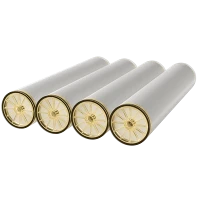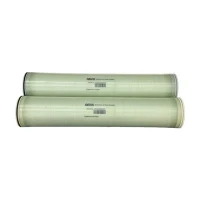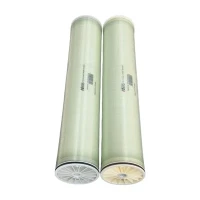

In the fields of liquid purification and resource recovery, hollow fiber ultrafiltration membranes, with their unique structure and superior performance, have become a key component of modern separation technology. Made from polymer materials through a special process, they have a hollow fiber structure, forming countless micropores with a pore size typically ranging from 0.01 to 0.1 micrometers. This allows for precise retention of bacteria, colloids, large organic molecules, and suspended particles, while allowing water and small solute molecules to pass freely, achieving highly efficient solid-liquid separation.
From a structural perspective, the ultra-fine diameter (tens to hundreds of micrometers) and high specific surface area of hollow fibers give them significant advantages: the effective filtration area per unit volume far exceeds that of traditional flat-sheet membranes, resulting in a smaller device size for the same processing capacity; the self-supporting fiber bundle structure simplifies component packaging, reduces operating resistance, and improves flux and anti-fouling capabilities. Furthermore, hydrophilic modification technology further optimizes anti-fouling performance and extends the stable operating cycle.
This technology has a wide range of applications, covering water treatment, food and pharmaceuticals, and bioengineering. In water treatment, it can be used as a pretreatment unit for reverse osmosis to remove turbidity and microorganisms, ensuring the safety of subsequent systems. In the food industry, it is used for whey protein concentration and juice clarification, balancing quality preservation and energy consumption control. In the biopharmaceutical field, it aids in vaccine purification and fermentation broth separation, meeting high cleanliness requirements. Compared to traditional filtration methods, its room-temperature operation and lack of phase change make it more suitable for handling heat-sensitive substances. Furthermore, its strong chemical stability allows for repeated use through cleaning and regeneration, reducing overall lifecycle costs.
With advancements in materials science and manufacturing processes, hollow fiber ultrafiltration membranes are iterating towards higher flux, resistance to strong acids and alkalis, and longer lifespan. As a representative of green separation technology, it continuously promotes water resource recycling, cleaner industrial production, and the upgrading of high-end manufacturing, playing an irreplaceable role in sustainable industrial development.