
Long-term engineering practice in high-pressure membrane technology has accumulated a wealth of experience guiding design, selection, and operation and maintenance. This experience stems from in-depth understanding and repeated verification of different operating conditions, providing solid support for improving system efficiency and reliability.
The primary experience lies in precisely matching membrane materials with operating conditions. High-pressure membranes are often used in complex systems with high salt content, high osmotic pressure, or containing organic solvents. The chemical composition, temperature, and pH of different feed solutions significantly affect membrane performance and lifespan. Practical experience shows that membrane types resistant to the corresponding media must be selected based on the target rejection and corrosiveness. For example, aromatic polyamide membranes have weak chlorine resistance and are easily damaged by strong oxidants; acid and alkali resistant membranes, on the other hand, exhibit stability over a wide pH range. The compatibility between materials and operating conditions directly determines the stable operating cycle and maintenance frequency of the membrane.
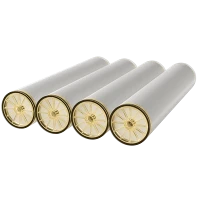
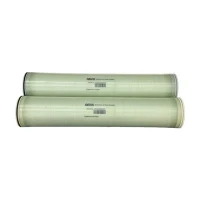
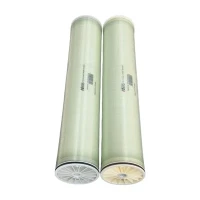
Component design and system integration experience are equally crucial. Spiral wound high-pressure membranes are widely used due to their large membrane area per unit volume and uniform flow field. However, in high-pressure environments, winding tension, mesh porosity, and sealing structure must be precisely controlled. Experience shows that overly dense membrane screens increase flow resistance and induce localized fouling, while overly sparse screens weaken the antifouling effect of turbulent flow. Poor end cap sealing can easily cause high-pressure leakage, requiring strict adherence to torque and testing methods during installation and maintenance. Proper configuration of energy recovery devices can significantly reduce energy consumption; their selection must match the system's pressure and flow curves to avoid overload or efficiency loss.
Regarding operation and control, experience emphasizes the synergistic optimization of pressure, temperature, and flow. While excessively high pressure can temporarily increase flux, it accelerates membrane fouling and energy consumption. Moderate temperature increases can reduce feed viscosity and improve mass transfer, but the temperature resistance limit of the membrane material must be considered. Chemical cleaning cycles should be based on the trends of pressure differential and permeate flux changes, rather than fixed intervals, to avoid over-cleaning and damaging the membrane surface. Online monitoring and data trend analysis help identify fouling types in advance, allowing for targeted selection of cleaning agents and methods, and improving recovery efficiency.
Furthermore, professional training and standardized operating procedures for the maintenance team are fundamental to ensuring long-term stable operation. Experience has shown that establishing a comprehensive system for membrane fouling diagnosis, cleaning records, and performance evaluation can significantly improve fault prediction capabilities and response efficiency.
In summary, high-pressure membrane practice integrates multi-dimensional wisdom in material selection, structural optimization, system matching, and intelligent control, providing a reusable technical path for various industries to achieve efficient, economical, and sustainable operation in complex separation tasks.