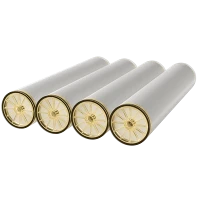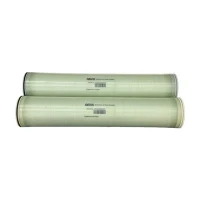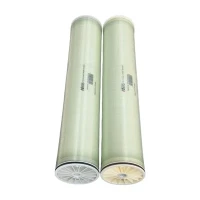

Quality control of tubular ultrafiltration membranes is integrated throughout the entire process, from material selection and manufacturing processes to finished product testing and outgoing management. It is the fundamental guarantee for ensuring their separation performance, mechanical strength, and long-term operational stability. In scenarios involving high suspended solids, high viscosity, and complex feed solutions, even subtle differences in membrane quality can directly impact system flux, rejection rate, and lifespan. Therefore, establishing a systematic and quantifiable quality control system is crucial.
Raw material quality is the first line of defense in quality control. There are many types of membrane materials, including organic materials such as polyethersulfone and polyvinylidene fluoride, and inorganic materials such as alumina and zirconium oxide. Their molecular weight distribution, crystallinity, and impurity content affect membrane uniformity and chemical resistance. Each batch of raw materials must be tested for physicochemical properties to ensure compliance with formulation requirements and avoid membrane pore size deviations or insufficient mechanical strength caused by raw material fluctuations.
Process control in the manufacturing process determines the reproducibility of membrane structure and performance. Taking wet phase transformation as an example, the concentration, viscosity, temperature, and additive ratio of the casting solution must be strictly controlled. The coating thickness and coagulation bath conditions must be kept constant; otherwise, uneven pore size distribution in the separation layer and accelerated flux decay will occur. The winding tension of the support tube and the sintering temperature profile (for ceramic membranes) also need to be monitored in real time to ensure a firm bond between the mechanical support and the membrane layer.
Finished product inspection is a critical step in verifying quality. Routine items include visual inspection, dimensional accuracy measurement, pure water flux determination, and rejection rate testing. Rejection rate testing often uses standard substances such as polyethylene glycol (PEG) and bovine serum albumin (BSA) as references to ensure that the rejection rate under specified pressure matches the design value. Mechanical performance testing covers burst pressure, compressive strength, and temperature resistance to determine the membrane's safety margin under fluctuating operating conditions. For ceramic membranes, microscopic analysis of porosity and pore size distribution is also required to ensure that the multi-level channel structure meets design requirements.
Closed-loop management of quality control is equally indispensable. A batch traceability system should be established, linking and archiving raw material sources, process parameters, test results, and operator information. This allows for rapid identification and corrective action in case of anomalies. Regular audits and process capability assessments (such as CPK analysis) can identify potential variation trends and drive continuous improvement.
Through rigorous quality control throughout the entire process, tubular ultrafiltration membranes can maintain high flux, high retention capacity, and long lifespan under complex operating conditions, providing reliable assurance for stable operation in water treatment, food, pharmaceutical, and chemical industries, and strengthening the product's reputation and competitiveness in the market.