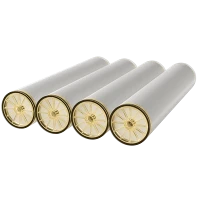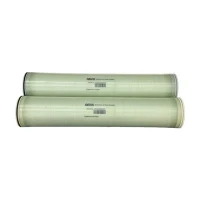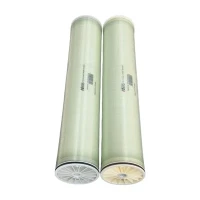

To fully utilize the performance and lifespan of tubular ultrafiltration membranes, standardized use and maintenance are crucial. The following systematically introduces usage techniques from aspects such as pre-start preparation, operation control, cleaning and maintenance, shutdown, and storage.
Pre-Start Preparation: System Preparation and Membrane Pretreatment
1. System Cleaning and Inspection
Before water flow, all parts in contact with the feed solution, including pipes, water tanks, and valves, must be thoroughly cleaned to remove welding slag, oil, and other impurities. For the initial flush, it is recommended to use pure water or ultrafiltration permeate to avoid damage to the membrane material from residual chlorine and other oxidants in municipal tap water. Simultaneously, check that the pumps, instruments, and valves are intact, the pipelines are secure, and confirm that all safety interlocks and protection devices are in normal working order.
2. Membrane Module Inspection and Installation
Before installation, check that the outer packaging of the membrane elements is intact and free from moisture or damage. Handle with care during transport; throwing or impact is strictly prohibited. During installation, ensure the inside of the pressure vessel is clean, and install the membrane modules sequentially according to their number and flow direction, avoiding forceful pulling. All interface sealing rings should be coated with an appropriate amount of lubricant to ensure a good seal and prevent twisting. After installation, slowly add water to release air and prevent air lock.
3. Initial Flushing and Draining of Protective Fluid New membranes or membrane modules that have been out of use for a long time often contain protective fluid at the factory. Before use, they must be flushed with low-pressure clean water (approximately 0.1 MPa) for at least 1 hour, then gradually increase the pressure to near the operating value, and continue flushing until the influent and effluent water quality indicators meet the standards and there is no odor. If used in the food, pharmaceutical, or other fields, samples must be taken for testing to confirm that the protective fluid has been completely removed.
During Operation: Parameter Control and Contamination Prevention
1. Strictly Control Operating Parameters Operating pressure, temperature, flow rate, and pH value must not exceed the manufacturer's specified range. Generally, the operating temperature of tubular ultrafiltration should be controlled below 40℃, and the pressure should be set to "low pressure, high flow rate" mode. 1. Special attention should be paid to avoiding the closure or blockage of valves on the permeate side to prevent abnormally high pressure from forming inside the membrane tubes, leading to membrane filament rupture or seal failure.
2. Enhance pretreatment and anti-abrasion measures. The feed solution should first pass through pretreatment units such as coarse filtration (e.g., 400–800 μm) and fine filtration (e.g., 1.0 mm) to remove hard particles such as sand and metal shavings, preventing membrane surface scratches. For oily or high-hardness wastewater, oil removal and softening processes should be added to reduce membrane fouling. Simultaneously, ensure unobstructed circulation pipelines and maintain sufficient cross-flow velocity (e.g., close to 5 m/s) to reduce concentration polarization and membrane surface deposition.
3. Implement online monitoring and trend analysis. Key parameters such as transmembrane pressure differential (TMP), permeate flow rate, influent and effluent turbidity, and COD should be recorded in real time. A significant increase in TMP or cleaning frequency indicates worsening membrane fouling, requiring timely intervention. It is recommended to establish an operation log and optimize the cleaning cycle and operating conditions through long-term data comparison.
Cleaning and Maintenance: Restoring Flux and Extending Lifespan
1. Physical Cleaning: Routinely, utilize the system's cleaning loop to periodically flush with low-pressure, high-flow-rate clean water to remove reversible loose fouling. Some systems can be configured with backwashing or online sponge ball scrubbing functions, but these must be strictly followed according to the manufacturer's instructions to avoid damaging the membrane surface due to improper operation.
2. Chemical Cleaning: When physical cleaning fails to restore flux (e.g., flux decrease of 20%–30%), chemical cleaning is required. The typical process is "acid washing → water washing → alkaline washing → water washing". Acid washing (pH 2–3) primarily removes inorganic scale and metal oxides; alkaline washing (pH 11–12) targets organic matter and biofilms and can be combined with oxidants such as sodium hypochlorite. The cleaning solution temperature is generally controlled at 35–40℃, and sufficient circulation time is required. After cleaning, the system must be thoroughly rinsed with clean water until neutral before restarting.
3. Routine Maintenance Regularly inspect and replace worn O-rings, gaskets, and filter elements. Keep the area around the equipment clean to prevent foreign objects from entering the system. For systems that are shut down for extended periods, drain the concentrate side and perform a standard cleaning of the membrane modules before filling them with clean water or a protective solution for storage.
Shutdown and Storage: Preventing Contamination and Damage
1. Short-Term Shutdown (Several Hours to 1 Day) After stopping operation, immediately flush the system with clean water to drain any residual liquid and keep the membrane modules moist to prevent drying and scaling.
2. Medium- to Long-Term Shutdown (Several Days to Several Months) If the shutdown lasts more than 3 days, perform a standard cleaning procedure and then fill the membrane modules with clean water. For shutdowns exceeding 3 days, it is recommended to fill the membrane tubing with approximately 2% food-grade protective solution (such as propionic acid) after cleaning and replace it periodically to prevent microbial growth and membrane material aging.
3. Long-term Storage Environment
Membrane modules should be stored in a dry, ventilated, dark, and cool environment, avoiding direct sunlight and high temperatures. When stacking, use pallets to elevate them to prevent moisture and mechanical damage. During storage, regularly check the packaging and liquid level, and perform maintenance cleaning as recommended by the manufacturer.