
Looking for RO, NF, DTRO, STRO, PTFE or electrophoretic UF membranes? This practical guide helps project buyers and EPC partners select suitable membrane elements for different water treatment applications.
As water resource constraints and discharge requirements become stricter globally, many EPC contractors and industrial plant operators are looking for stable membrane solutions for wastewater reuse, brine concentration and seawater desalination. One of the most frequent questions we receive from buyers is: How to pick the right membrane for my feed water? Improper membrane selection may lead to frequent fouling, unstable permeate quality and higher operational costs.
This guide introduces our available membrane series, typical application scenarios and practical selection factors, to help you narrow down the right membrane type for your project.
1. Overview of Our Membrane Products & Application Scenarios
We supply a wide range of membrane elements and related supporting equipment for industrial water treatment. Each membrane series is designed for specific feed water conditions.
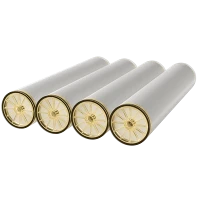
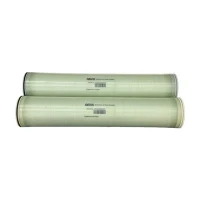
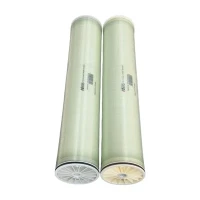
RO Membranes: Including high-rejection brackish water RO (BWRO), anti-fouling RO, sanitary RO, seawater RO (SWRO) and CPRO compact RO elements. BWRO is widely used for brackish water treatment and boiler feed water preparation. Anti-fouling RO suits wastewater reuse with relatively high organic content. Sanitary RO fits food and beverage, pharmaceutical purified water requirements. SWRO is applied for seawater desalination. CPRO compact RO is well suited for skid-mounted and containerized systems with limited installation space.
NF Membranes: CPNF and DTNF cross-flow nanofiltration membranes. Under proper operating conditions, nanofiltration can selectively remove divalent ions, color and macromolecular organics while retaining part of monovalent salts. It is commonly used for water softening, dye wastewater treatment and material concentration.
DTRO & STRO Membranes: Disc Tube RO and Spiral-wound Tube RO (STRO) elements. With open flow channel structure, DTRO and STRO have good anti-fouling performance. They are widely adopted for high-salinity wastewater such as landfill leachate, electroplating wastewater and chemical brine.
Ultrafiltration Membranes: EUF electrophoretic paint UF membrane: dedicated for automotive coating lines to recover electrophoretic paint. PTFE membrane: excellent chemical inertness, suitable for filtration under strong corrosive working conditions.
Special Membranes: We also provide high-temperature resistant, high-pressure resistant and solvent-resistant membranes for special separation applications.
Besides standalone membrane elements, we also support skid-mounted and containerized water treatment equipment, including seawater desalination systems.
2. Key Factors for Membrane Selection
When choosing membrane elements, we suggest you evaluate these points according to your project data:
Feed water parameters: pH value, operating temperature, TDS, COD, oil content, hardness and free chlorine. These parameters decide which membrane grade is compatible.
Required permeate quality and target rejection rate. Nominal data from datasheets is for reference; actual performance depends on your real feed water.
Operating pressure and system recovery rate. Higher recovery helps save water, but over-high recovery will increase scaling risk.
CIP chemical compatibility. Confirm the cleaning agents you plan to use, and check membrane tolerance to acid, alkali and sodium hypochlorite.
Dimension compatibility. We provide standard-size spiral elements, DTRO disc sets, you can check matching with your existing pressure vessels and skid frames.
Technical support. We can provide operation guidance, CIP cleaning recommendations and document support for your projects.
3. Common Selection Mistakes to Avoid
Using high-rejection RO for dye separation: NF is usually more energy-efficient and suitable for this scenario.
Applying ordinary spiral RO directly for landfill leachate: it is easy to get fouled quickly. DTRO is a more appropriate option.
Operating conventional polymer membranes under continuous high temperature above the allowable range, which will cause irreversible damage.
Neglecting pretreatment. Even anti-fouling RO cannot run stably with raw water containing excessive oil and suspended solids.
4. What We Can Offer
We are Nano Sepmer Environmental Technology based in Hangzhou. Our product portfolio covers RO, NF, DTRO, STRO, PTFE, electrophoretic UF and special functional membranes, together with skid and containerized water treatment systems. We have exported our membrane products to many overseas markets. We support EPC partners with membrane supply, as well as PID drawing and BOM documentation upon request. We can provide quotation and technical proposal based on your water analysis report and project requirements.
5. Get In Touch
There is no universal membrane for all water projects. The most suitable membrane is the one matching your feed water condition and project targets. If you have an ongoing wastewater reuse, desalination or brine treatment project, share your water analysis report and quality requirements with us. We will prepare a targeted selection plan and quotation for you.